
By Emmanuel Onyedika
The Federal Government has restated its commitment to deepen collaboration with the Catholic Bishops’ Conference of Nigeria (CBCN), other faith-based organisations and stakeholders in addressing Nigeria’s security, economic and social challenges.
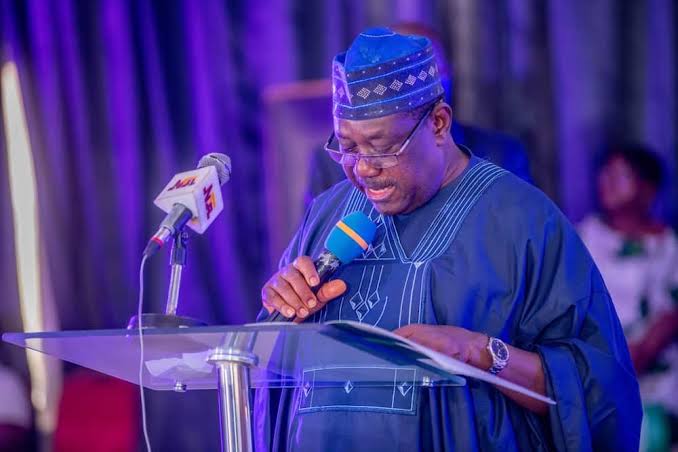
Secretary to the Government of the Federation (SGF), Senator George Akume, made this known in a statement issued by his Special Adviser on Media and Publicity, Yomi Odunuga, following a recent engagement between President Bola Tinubu and the leadership of the CBCN.
Akume emphasised that many of Nigeria’s pressing challenges require partnership with faith communities, traditional institutions, civil society, the private sector and citizens. He assured that the Office of the SGF would continue consultations with the CBCN and other groups “on the issues raised during the meeting and on areas where greater collaboration can advance the national interest.”
He described the Catholic Church as “one of Nigeria’s most important development partners” for its contributions in education, healthcare, humanitarian services, peacebuilding and moral guidance. Discussions between Tinubu and the Bishops, he said, were “candid, respectful and constructive,” covering security, economic hardship, public services, education, electoral credibility, political pluralism and religious freedom.
Both sides acknowledged progress made by the administration, including the student loan programme and recent successes by security agencies in securing the release of abducted schoolchildren and teachers. Akume admitted Nigerians are facing hardship but described it as “a passing phase,” stressing that reforms were designed to correct structural weaknesses and restore stability.
He cited ongoing investments in rail projects, the Sokoto–Badagry and Lagos–Calabar superhighways, road rehabilitation, food security initiatives through NALDA, CNG power stations, and constitutional reforms granting states greater roles in electricity. On security, he highlighted the creation of four new Army divisions in Benue, Kwara, Taraba and Edo states, as well as the establishment of the Office of Homeland Security.
Addressing concerns about democracy, Akume insisted that the Tinubu administration was not seeking a one-party state. He pointed to INEC’s registration of 21 political parties as evidence of political pluralism and pledged continued respect for the commission’s autonomy. He also commended the Central Bank of Nigeria for “discharging its statutory responsibility for monetary and price stability with professionalism and institutional independence.”
Akume concluded that the next phase of reforms would focus on translating economic stability into lower inflation, affordable food, quality jobs, stronger public services and improved infrastructure.