
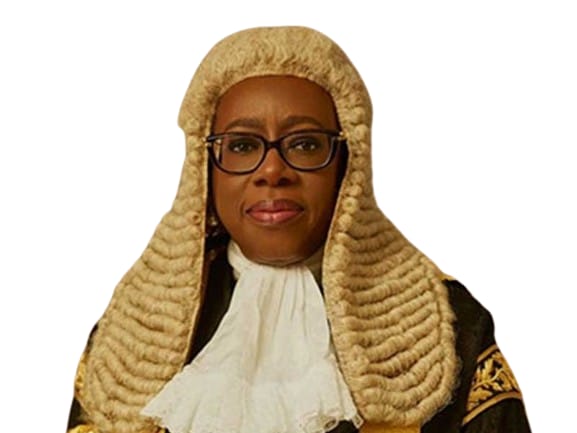
By Tekena Amieyeofori
The Nigerian Law Society (NLS) has dismissed the Chief Justice of Nigeria, Justice Kudirat Kekere-Ekun’s directive asking legal practitioners to drop “Barrister” from their titles and use “Esquire” instead.
According to the society, the order lacks backing in existing law.
The CJN, in a July 13, 2026 memo signed by the Chief Registrar of the Supreme Court, Kabir Akanbi, told lawyers, registrars and other legal officers to stop using “Barrister” before their names in all official dealings at the Supreme Court. The memo stated the move was aimed at upholding professional standards at the apex court.
Responding on Wednesday, NLS Executive Director, Dr. Tonye Jaja, said the Legal Practitioners Act of 1962 already recognises “Barrister” and “Solicitor of the Supreme Court of Nigeria” as valid titles for lawyers called to the Nigerian Bar.
Jaja noted that while “Barrister” on its own does not cover the full title, “Esquire” is also not mentioned in the statute.
“Using ‘Barrister’ as a title is a half-truth that leaves out the title of ‘Solicitor’. As an alternative title, the title of ‘Esquire’ or its abbreviated version ‘Esq.’ was to be used as the appropriate suffix by Nigerian lawyers in their official correspondences to the Supreme Court of Nigeria,” Jaja observed.
He further stated that the CJN’s instruction cannot be anchored on any section of the Legal Practitioners Act.
“The problem with this recommended title of ‘Esquire’, or even other alternatives ‘Barrister-At-Law’ or ‘Attorney-At-Law’ is that they do not appear inside the Legal Practitioners Act, 1962,” Jaja said.
He added that under the current legal framework, neither the CJN, the Legal Practitioners Privileges Committee (LPPC) nor the Nigerian Bar Association (NBA) has the authority to impose new title requirements that are not contained in the Act.
The NLS also raised concerns over what it called a double standard in how the LPPC and Justice James Omotosho of the Federal High Court, Abuja, are handling the “Blue Silks” rank of Senior Counsel of Nigeria (SCN). Critics argue SCN should not be recognised because it is not in the Legal Practitioners Act.
The society countered that the express mention of Senior Advocate of Nigeria (SAN) in the law does not invalidate other titles.
Jaja accused the CJN and LPPC of selective enforcement.
“The Blue Silks rank of Senior Counsel of Nigeria, SCN, is not stated inside the Legal Practitioners Act, 1962. This is the more reason why neither the NBA nor the LPPC has any powers of regulation over the Blue Silks rank as per the judgment of Hon. Justice Mohammed Garba Umar of the Federal High Court Abuja.
“It is an act of contradiction and hypocrisy for both the CJN and the Chief Registrar of the Supreme Court of Nigeria to impose a ban upon a title ‘Barrister’ that is explicitly listed inside the Legal Practitioners Act, 1962 and replace it with alternatives that are not explicitly stated inside any statutes.
“Another level of the hypocrisy and contradiction which is manifestly discriminatory in violation of Section 42 of the Constitution of the Federal Republic of Nigeria, 1999 is for the CJN and LPPC to permit Nigerian lawyers to use some titles (such as ‘Esquire’ for example) that do not appear in any statutes but attempt to ban the use of others (such as the Blue Silks rank of Senior Counsel of Nigeria-SCN).”
Jaja also traced the origin of the SAN title, saying it came from the British King’s Counsel tradition and was adopted in Nigeria in 1975, not created directly by Nigerian legislation. He noted the King’s Counsel tradition dates back to the 1500s in Britain, with Francis Bacon recorded as the first holder.
He argued that the absence of a title from a statute does not automatically make its use illegal.
According to him, the SCN title conferred by the Nigerian Law Society and the Body of Senior Counsel of Nigeria (BOSCON) derives its authority from professional guidelines, not direct statutory creation. He said those guidelines were established under Section 40 of the 1999 Constitution and Section 19 of the National Assembly Service Commission Act, 2014.