
By Priye Briggs
Since crude oil became Nigeria’s economic mainstay, the nation’s fortunes have declined in inverse proportion to its earnings. Oil has created obscene wealth for a privileged few while impoverishing the vast majority of the people. It has poisoned politics; rents flow directly into the pockets of politicians who deploy violence to capture and retain power. It has adversely impacted governance, rendering institutions incapable of fulfilling their basic obligations to citizens.
In 1993, globally renowned economist Richard Auty gave this paradox a name: the Resource Curse. Nowhere is this paradox more viscerally felt than in the Niger Delta. The region that produces Nigeria’s oil wealth bears all the negative externalities of its production: polluted creeks, destroyed livelihoods, chronic poverty, and a cycle of violent conflict that the Nigerian state has managed but never resolved. The future, for many, appears bleak.
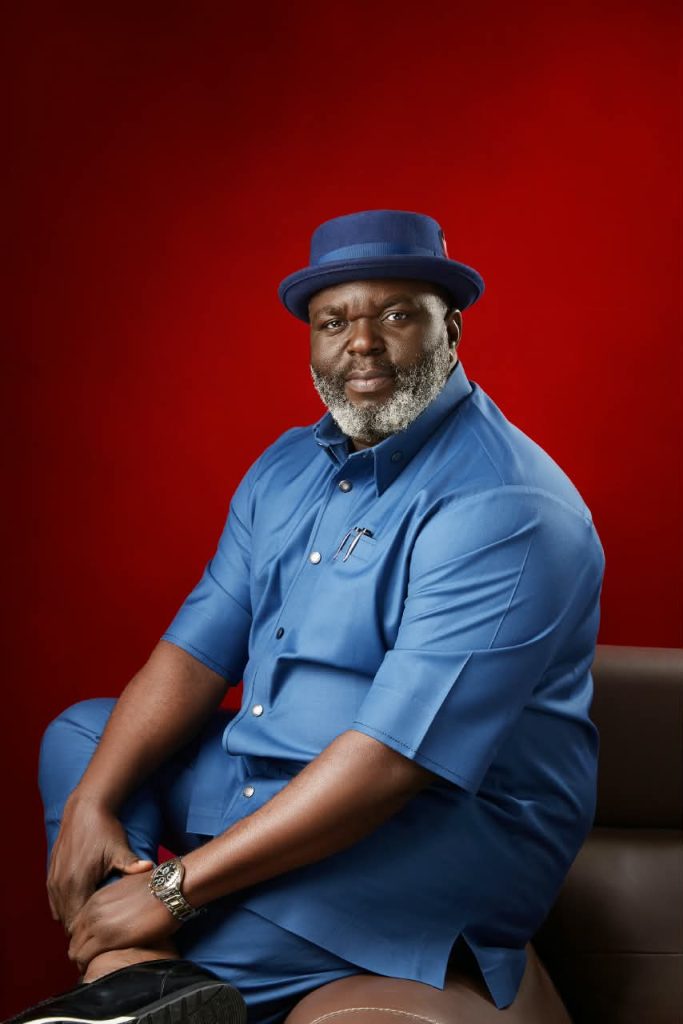
Yet light glimmers in the form of a different kind of politics, and a different kind of candidate in Rivers State. Mr. Nature Dumale Kieghe, governorship candidate of the Peoples Redemption Party (PRP) is on a rescue mission to Government House.
He did not suddenly discover structural injustice and the Niger Delta struggle during an election season in 2027. He grew up in it. But where others opted for violence, he embraced non-violence. For over a decade, through his Youth Rescue international Development Organisation, he has done what the government has failed to do: rehabilitate cultists, counsel drug addicts, transform conflict at the grassroots, and reintegrate purveyors of insecurity back into society. He is not theorising about peace, he has built a practice around it. He is, in every sense, a peace ambassador.
This is the template he seeks to deploy at the state level: a rescue mission that reinvents governance with security through mental transformation as its foundation. It is not a theory imported from abroad; it is a homegrown model tested in the creeks and streets of the Niger Delta.
It is no accident that Kieghe finds his political home in the PRP, the party of Mallam Aminu Kano, the original talakawa party in the Second Republic. At a time when other parties brandish bogus blueprints like knights in shining armour, the PRP’s governance template is concise and people-centred. Built on five pillars of justice for all, genuine democratic rule, an improved economy, national unity, and power vested in the people, it seeks to reverse the resource curse itself. Nationally, this translates into a tripod: security, human capital development, and economic productivity.
There is logic to this sequencing. No economic blueprint can survive in the midst of pervasive insecurity. Successive governments have been unable to implement the Safe School Initiative not for lack of funds, but for lack of a reliable security roadmap. School enrollment is at its lowest ebb, especially in the North where terrorists and bandits have sacked communities and forced farmers to flee their farmlands. The consequence is predictable: hunger, starvation, and displacement.
Kieghe understands this nexus. Drawing from the national PRP strategy, his blueprint for Rivers State speaks directly to its own variant of the resource curse: insecurity, youth restiveness, human capital deficit, food insecurity, and deepening poverty.
What makes his plan compelling is not its novelty, but its coherence. Each pillar reinforces the other. Security is the precondition for human capital development. Human capital is the driver of economic productivity. Economic productivity, in turn, sustains peace. This is the exact antidote to the governance crisis that has trapped Rivers State in a vicious cycle of underdevelopment for years.
Kieghe’s candidacy is also, profoundly, an act of unity. He is a son of the Ogoni nation, a people who have paid the highest price for peace in the Niger Delta, yet have never been entrusted with the keys to Government House since Rivers State was created in 1967. He is also maternally Ogba, a peaceful people inhabiting the hydrocarbon-rich Orashi region that is quietly sustaining Nigeria’s economy. At such a time politics is fractured by ethnic arithmetic and prebendalism, the entire state remains his constituency. Like an iroko tree whose taproots run deep and wide, Kieghe’s life and work have tied him to virtually every ethnic nationality in Rivers State: riverine and upland, Ogoni, Ikwerre, Kalabari, Ogba, Ekpeye, Andoni, Okrika and so forth.
Mr. Kieghe is not the creation of a political sponsor. No godfather is funding him to protect an investment and perpetuate the status quo. His ambition is not transactional; it is redemptive. He is not running to rule, but to rescue Rivers State from the doldrums.
For decades, Rivers State has tried to pacify its youths without healing them, only for violence to return in new forms. That approach has failed. The creeks remain polluted, the youths restive, the future uncertain. Mr. Kieghe offers a different doctrine: you cannot secure a people you have not healed. His candidacy is a call to move from pacification to transformation. In 2027, it is time for Rivers State to embrace Nature, not just as a man who has never held power, but as a principle of healing, balance, and renewal that power has never tried in the Nation’s Treasure Base.