
By Tekena Amieyeofori
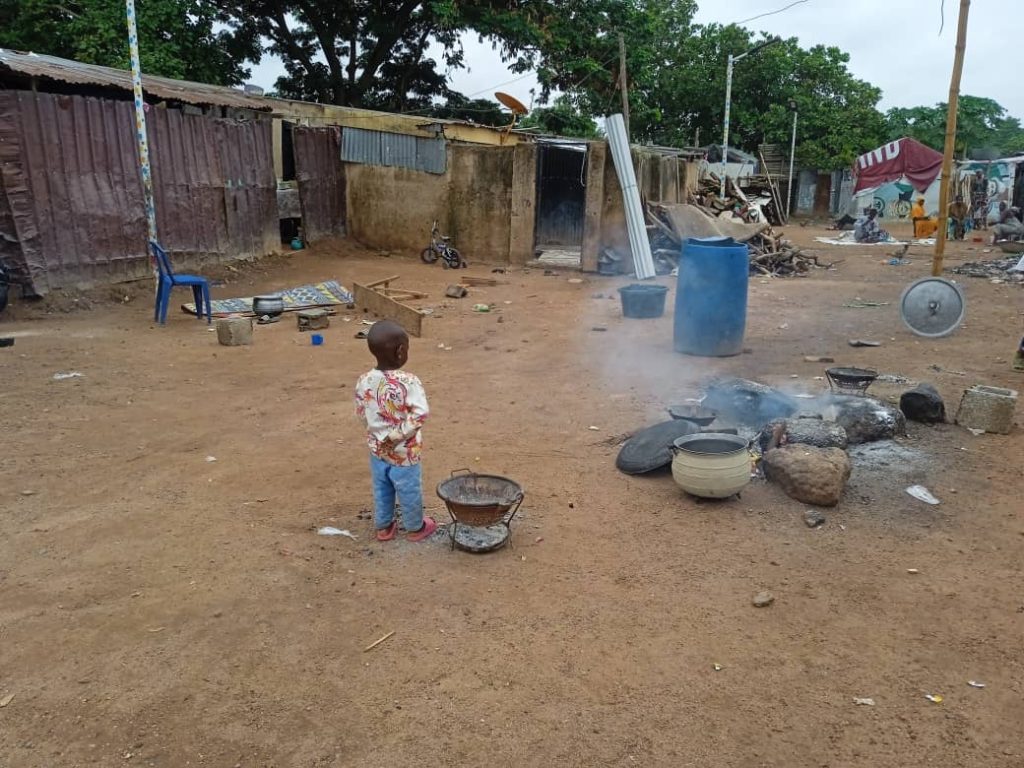
The Durumi Camp at Area One is one of 18 temporary settlements reserved for Internally Displaced Persons (IDPs) in Nigeria’s Federal Capital Territory. It is littered with makeshift structures erected with tarpaulin and cellophane bags. Around 4,000 residents, predominantly women and children, are crammed into filthy cubicles built without provisions for ventilation. These enclosed spaces house several families without access to safe drinking water, clean toilets, electricity, healthcare, or quality education. Durumi Camp is partitioned into quarters accessible by winding paths, all without gates or perimeter fencing. Security is fragile, and safety is a matter of grave concern. Most cubicles were erected with combustible materials, making fire incidents frequent. Five children were reported dead in one of the most fatal fires in 2017.
Life in Durumi Camp is nasty, brutish, and hopeless, especially for children who are the worst victims of disease prevalence occasioned by poor sanitary conditions. Residents are left to their fate without any functional healthcare facility. The only semblance of healthcare is a scanty room where pregnant women are delivered by more experienced counterparts during childbirth. It is starkly bare, without drugs or trained professionals to save lives during emergencies. Although the camp accounts for one of the largest concentrations of IDPs in the FCT, it is completely bereft of government presence. The few available amenities, including education, are provided by public-spirited individuals to assist residents, especially children whose collective future precariously hangs in the balance.
On a second visit to the camp, on June 10, 2026, I met Monisola Aiyekusehin, a young lady who runs Betharbel Inclusive Academy, one of the two privately-run primary schools operating in the camp. Motivated by compassion rather than government support, she explained that she volunteered to run the school after a first-time visit to sensitise women on safeguarding reproductive health. “When I first visited shortly after Covid-19, I saw children who were supposed to be in school playing and running around the camp. After making inquiries, I discovered that there was no school. It was an opportunity to reach out to the needy, even though I didn’t have sufficient funds to intervene in the plight of the kids in this camp,” she said.
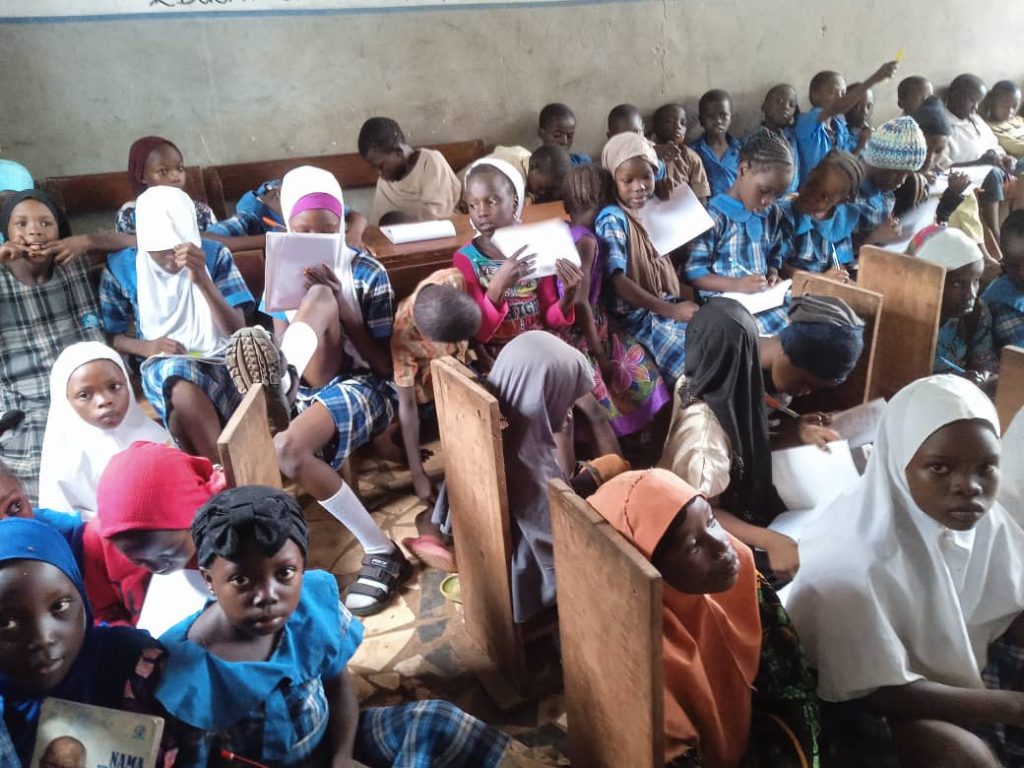
Betharbel Inclusive Academy has six classrooms and six teachers attending to over 500 pupils. Each classroom is overcrowded, with over 70 pupils to one teacher. Most sit on bare floors, while a few secure places at dilapidated desks if they arrive early. “Good morning, sir,” the pupils chorused when I visited each classroom. They seemed happy, but their deprivation was obvious. They were shabbily clad in tattered uniforms and went about barefooted. All provisions are free-of-charge, courtesy of Aiyekusehin, who deploys her skills as a trained educationist to protect the rights of the Nigerian child where the government has failed.
When the school became operational in 2021, pupils were enrolled without uniforms. Enrollment was low because parents lacked incentives to send their children to school. “We had to introduce uniforms and free meals to deal with the problem of low enrolment,” she explained. Today, Betharbel Inclusive Academy has surmounted that challenge. It is upgrading facilities with an additional structure to accommodate more pupils and address overcrowding. “I have the intention to build a 500-bed boarding hostel to accommodate more pupils and encourage them to remain here even when the authorities evict families as they often do,” she said.
Her dream of providing a boarding facility is to shield children from the trauma of incessant evictions. Recently, the FCT administration forcefully evicted residents in one of the quarters at Durumi Camp without providing alternative resettlement. This negatively affected enrollment as some pupils were compelled to return to unsafe communities they fled years ago. What is obtainable at Durumi Camp clearly violates UN provisions on the rights of the child, which guarantee free, compulsory primary education and equal access to secondary and higher education without discrimination. UNESCO, in Articles 28 and 29, advocates free, equitable, and quality education aimed at developing every child’s full potential.
Administrative neglect at Durumi Camp not only flouts international covenants but contravenes provisions of Nigeria’s newly enacted legislation on the rights of IDPs. After sustained advocacy, the National Assembly responded with the drafting of the IDP domestication bill, which President Bola Tinubu signed into law in March 2026. The Kampala Convention Domestication and Enforcement Act accords IDPs rights to protection and dignity. Under the law, those guilty of arbitrarily evicting IDPs are liable to imprisonment and fines of at least N5,000,000. Beyond recognising IDPs as right holders entitled to education and healthcare, the law provides full protection for expectant mothers, children, and persons living with disabilities.
The Ministry of Humanitarian Affairs and Poverty Reduction recently embarked on outreach programmes to provide succour for IDPs. In March, the ministry distributed relief materials to residents of the Kuchingoro IDP camp in the FCT and provided cash support of N10,000 each to 300 households. Dr. Bernard Doro, Minister of Humanitarian Affairs and Poverty Reduction, noted that government efforts are focused not only on providing relief materials but on rebuilding lives. “This visit is a reminder that leadership must remain connected to the people, especially those who need support the most,” he said.
Yet, as the squalid condition of Durumi Camp suggests, it is not on the government’s agenda. Kromac News visited the Ministry of Humanitarian Affairs to establish its actual status and obtain information regarding the Internally Displaced Persons Management Fund and the Internal Displacement Management Committee proposed in the Kampala Convention Domestication and Enforcement Act. Janet McDickson, Head of Press Unit at the ministry, refused to comment, claiming she did not have the authority to speak on sensitive issues.
The official silence persists despite the plight of citizens uprooted by insurgency, banditry, and natural disasters. Most residents at Durumi Camp and their counterparts nationwide have been dislocated from their means of livelihood, wallowing in poverty, deprivation, and insecurity. In 2011, Liyatu Ayuba, the woman leader at the camp, lost her husband at the height of the Boko Haram insurgency in Borno State. “Since then, life has become difficult for me,” she said. Idris Halilu, the camp’s spokesperson, who has been battling with a nail injury for months, explained that access to healthcare has been an uphill task. “We have written many letters to agencies of the Federal Government and the National Assembly without any positive response since 2011,” he said.
The testimonies of residents at Durumi Camp suggest that the government is unaccountable to the Kampala Convention Domestication and Enforcement Act and has lost the confidence and trust of its internally displaced citizens. Women and children remain disproportionately affected. As sociologist Kinikawo Samuel observed, “women and children deserve special attention under the domestication of the Kampala Convention.”
Durumi Camp is more than a settlement; it is a mirror reflecting Nigeria’s failure to protect its most vulnerable. In the shadows of the capital city, thousands of citizens live without dignity, safety, or hope. Their plight is a reminder that laws without enforcement are empty promises, and that compassion, not neglect, must guide the nation’s conscience.