
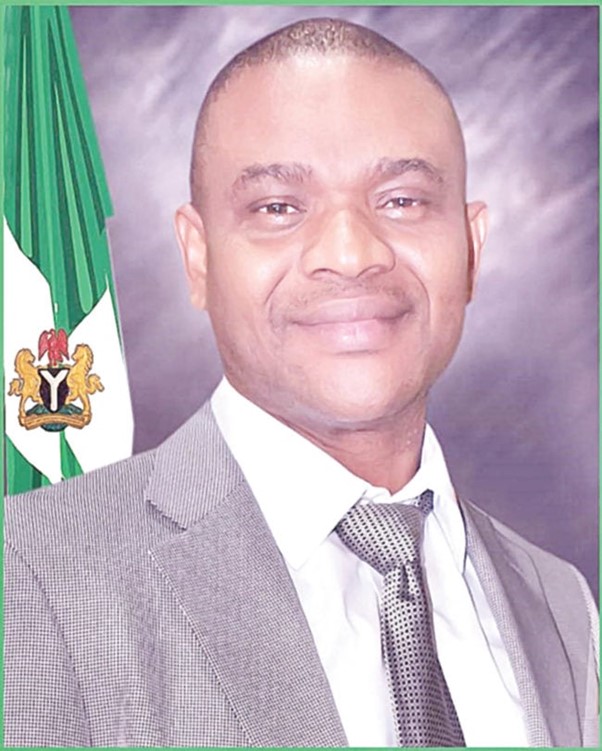
Kestin Pondi
MD, Tantita Security Services
For five years, Dr. Marvin Dekil served as pioneer coordinator of the Hydrocarbon Pollution Remediation Project (HYPREP). Dr. Dekil’s appointment was strategic – it was to deploy his expertise, as an environmental scientist of international repute and trained lawyer, in the remediation of severely polluted sites, following decades of oil extraction in Ogoniland. After laying the foundation for a successful clean-up of oil -impacted communities and the commencement of the restoration of lost livelihoods in Ogoniland, Dr. Dekil is back to his private consultancy business. Recently, he was sighted at a public function in Abuja- Nigeria’s seat of power – and approached for an interview on the state of the environment in Ogoniland and the broader Niger Delta region of Nigeria.
Looking back, Dr. Dekil is satisfied with the intervention in Ogoniland, which he describes as the outcome of many years of sustained engagement with the Nigerian authorities and the international community. During the non-violent struggle for an existence in Ogoniland, he recalls, the surviving protagonists were routinely hounded by military authorities, while others paid the supreme sacrifice for legitimately demanding their rights. “ We lost some of our brightest minds and leaders during the military onslaught”, the former HYPREP boss reflects. In spite of the painful losses encountered, the distraught communities soldiered on, in their campaign for environmental justice in Ogoniland.
The creation of HYPREP and its intervention are based on the recommendations of the United Nations Environment Program (UNEP) to restore the despoiled environment back to its full reproductive health and create alternative livelihoods for victims of ecological damage. While some civil society groups have alleged delayed achievement of milestones in critical areas of intervention, work is in progress, showing glimmers of light at the end of the tunnel. At the moment, mangrove restoration, oiled shoreline clean-up, and soil and groundwater remediation are at various stages of completion. Official figures released in mid-2025 show that the intervention in Ogoniland has created direct jobs for 7,000 women and youths, and has provided vocational and specialised training for beneficiaries in diverse skill sets. “It is instructive to note that people took advantage of international laws at a time Nigeria was governed by repressive military regimes to seek redress from environmental rights violations in Ogoniland”, says Dr. Dekil.
Ogoniland is only one of the many casualties of environmentally unsustainable methods of crude oil and gas production in the Niger Delta. For several decades, other oil -producing communities have had to contend with multiple incidents of crude oil spills and constant flaring of associated gas by operators in the petroleum industry. After many years of seeking legal protection against environmental injustice, the Petroleum Industry Act (PIA) was enacted in 2021.
In Sections 102 to 108, the oil and gas law makes adequate provisions for environmental sustainability with an emphasis on compliance with health, safety, and environmental standards for operators in the petroleum industry. This all-important piece of legislation also empowers regulators to compel operators to conduct Environmental Impact Assessment (EIAs) before commencing exploration and production activities. In Section 96(1), the PIA empowers regulators to withdraw the operational licences of defaulters in the oil and gas industry.
The 2021 Act was meant to end the cycle of spills and flaring. Yet in February 2026, communities in OMLs 17, 11, and 29 reported worsening flares after Shell’s exit. The implication is that the law exists, but its enforcement doesn’t.
For communities lying in close proximity to gas flare sites, this is evident in dry season highs in temperatures that usually exceed 35 degrees Celsius. In such vulnerable communities, local heat stress is pushed far beyond the global average target of 1.5 degrees Celsius above pre-industrial levels.
Rising temperatures put many lives at risk with worsening health conditions and food insecurity in the delta. Consequently, there are fears that communities in the region may suffer disproportionately from the WHO’s projection that climate change will cause at least 250,000 additional deaths annually by the 2030s.
In response, Dr. Dekil observes that “if the law does not bring desired change, it means it’s as good as non-existent. Citizens have the obligation to test the law in the courts and enforce their environmental rights”
With reference to his native Ogoniland, Dr. Dekil insists that it takes collective efforts to get environmental justice. According to him, “while the government and its regulatory agencies must ensure global best practices in the oil and gas industry, the citizens also have their part to play in pursuit of environmental justice”.
The call for citizens’ action mirrors the courage of undergraduate students in the Pacific Islands who filed a suit in the ICJ in 2019, demanding drastic decarbonisation from major global emitters. The youth-led initiative had been borne out of a growing frustration over climate-induced rising sea levels across low-lying island nations of the Pacific. In July 2025, the ICJ gave an advisory opinion that nations must protect indigenous people from the negative impacts of climate change.
This victory does not only set a crucial precedent for future climate legislations; it empowers local communities to hold duty bearers accountable for climate-related losses. It inspires, to a large extent, the position canvassed by Dr. Dekil when he demands citizens’ action in pursuit of environmental justice. “We look forward to the era preceding crude oil and gas production when we had a clean environment that supported healthy living in the Niger Delta”, he says.