
By Tekena Amieyeofori
History judges leaders by how they handle crises. When famine struck Ireland in the 1840s, Sir Charles Trevelyan chose bureaucracy over people. Aid was delayed. Over a million people died. When war came to Britain in 1940, Winston Churchill chose unity over partisan politics. He told the truth and mobilised the nation for action. Britain survived.
The difference was not the problem. It was the response. Insensitive leadership creates chaos. Responsive leadership fixes difficult situations and produces results.
Rivers State today has its own existential challenges. The question before us in 2027 is simple: Do we want a Trevelyan leadership style that inflames crisis, or a Churchill approach that delivers solutions? That is why the candidacy of O.K. Chinda matters.
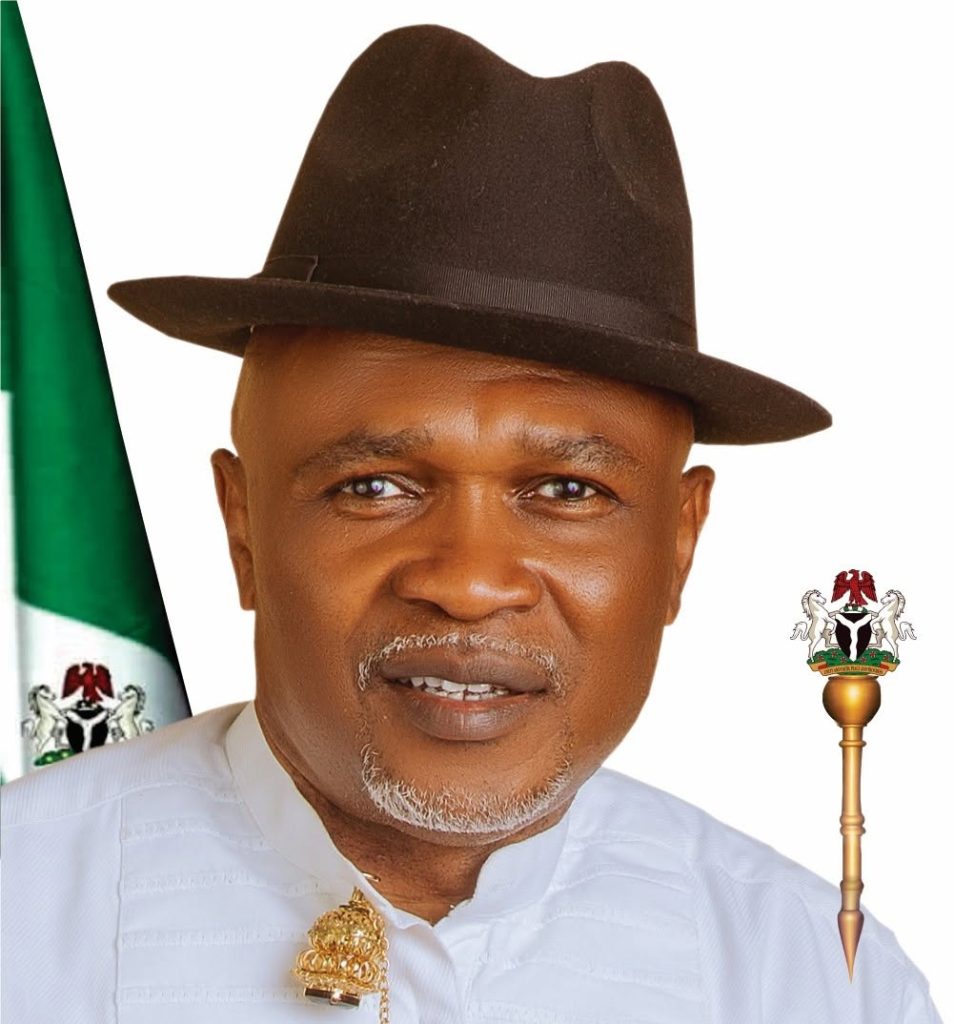
That Churchill approach of unity, competence, and decisive action is exactly what Rivers State needs in 2027. And it is exactly what Hon. O.K. Chinda has demonstrated in 15 years of service at the National Assembly.
As Minority Leader and Chairman of the House Committee on Public Accounts, he was not known for empty rhetoric. He was known for oversight, for asking tough questions, and for ensuring public resources delivered value to citizens. In a chamber often defined by party lines, he built bridges, and demanded accountability. That is responsive leadership: putting problem-solving above politics, and people above positions.
Building on that experience, Hon. Chinda has developed the IMPACT Agenda, a comprehensive six-pillar blueprint designed to reposition Rivers State as a national economic hub and a leading investment destination. The IMPACT Agenda focuses on: Infrastructure, Modern Agriculture, People’s Health, Advanced Technology, Capacity-Building Education, and Transportation.
These are not abstract ideas. They are targeted responses to the existential challenges we face: inadequate infrastructure, a health system overwhelmed by climate-related diseases, flooding, and youth unemployment that threatens our peace, as well as an economy that must diversify beyond oil. The IMPACT Agenda is Chinda’s plan to move Rivers from crisis management to purposeful development.
Let us break it down.
Infrastructure
Under the IMPACT Agenda, infrastructure means constructing or rehabilitating roads linking the 23 LGAs and functional drainage to address perennial flooding in Port Harcourt, Ahoada and Mbiama, and providing reliable power that allows businesses to run without generators. This is not about commissioning projects for pictures. It is about building critical infrastructure for sustainable development.
Modern Agriculture
Rivers State has land, water, and a young population. What we lack is a system that optimally exploits abundant human and natural resources. Modern Agriculture under Chinda means moving from subsistence farming to agro-industrial value chains. It means siting fish processing plants in the riverine areas, cassava and palm oil clusters in the uplands, and cold chain logistics that reduce post-harvest losses. It also means partnering with research institutions so our farmers use modern technology, not outdated cutlasses. The goal is simple: food security, jobs, and export earnings.
People’s Health
Health is not a luxury. It is the first line of defence against any existential threat. The IMPACT Agenda prioritises primary healthcare centres in urban centres and rural communities, all fully staffed and equipped with modern facilities. It means reinvigorating existing specialist hospitals to better handle trauma, maternal care, and climate-related illnesses. It means managing health insurance that makes treatment affordable.
Advanced Technology
The 21st century economy runs on data, skills, and innovation. Rivers cannot be left behind. Advanced Technology under IMPACT means providing digital government services so citizens don’t spend days chasing signatures. It means siting tech hubs in Port Harcourt, Bori, Ahoada, and Degema to train our youth in software, AI, and renewable energy. It means using technology to monitor flooding, secure our waterways, and track public spending. Technology is how we leapfrog old problems.
Capacity-Building Education
No state develops beyond the capacity of its people. The emphasis on Capacity-Building Education means more than building classrooms. It means designing a curriculum that teaches coding, vocational skills, and entrepreneurship alongside literacy. It means employing teachers who are trained and paid on time. It means promoting scholarship that partners with industry to ensure that graduates are employable. Chinda’s track record of facilitating classrooms and learning materials in Obio/Akpor shows he understands that education is an investment, not an expense.
Transportation
A coastal and riverine state must get transportation on land and water right. Transportation under IMPACT means functional water transport to connect riverine communities safely and affordably. It means providing a reliable urban mass transit scheme to reduce traffic and cost of living in Port Harcourt. It means maintaining and expanding road networks and investing in rail feasibility to link Rivers to the national economy. When people and goods move freely, the economy moves.
Taken together, the six pillars are interdependent. You cannot have Modern Agriculture without Transportation. You cannot have Advanced Technology without Capacity-Building Education. You cannot have People’s Health safeguarded without quality Infrastructure. That is why IMPACT is a system, not a slogan.
But a blueprint is only as good as the leader implementing it. This is where Chinda’s record matters. Fifteen years in the House of Representatives taught him how government works and where it fails. As Chairman of Public Accounts, he interrogated budgets line by line. As Minority Leader, he learned to negotiate, to build consensus, and to put national interest above party interest. Those are the same skills Rivers State will need in 2027: a leader who can manage scarce resources, unite competing interests, and stay focused on results.
Responsive leadership is also about inclusion. Rivers State is diverse: 23 LGAs, three senatorial districts, riverine and upland, different ethnic groups and faiths. The Trevelyan approach divides and excludes. The Churchill approach unites and includes. A Chinda administration will operate on merit and representation. It will respond to unforeseen crises by providing direction that solves problems and yields results.
This matters because trust is the currency of governance. When people believe their leader sees them, hears them, and is working for them, they cooperate. They pay taxes. They defend public property. They report crime. They invest. Responsive leadership builds that trust by showing up in floods, by delivering clinics before cameras arrive, by explaining tough decisions honestly.
The alternative is to embrace the politics of reaction. To wait for a bridge to collapse before it is fixed. To allow rising unemployment rates to spark unrest before jobs are created. To wait for the next flood to displace thousands before dredging and draining. That is the Trevelyan path. And Rivers State cannot afford it in 2027.
We are at an inflection point. Climate change will bring more flooding. Global energy transition will pressure our oil-dependent economy. Our youth population is growing and demanding opportunity. These are not problems we can ignore. Addressing them requires replicating the Churchill kind of leadership: being honest about the challenge, providing clarity, and demonstrating a relentless disposition in execution.
Hon. O.K. Chinda offers that kind of leadership. He has been tested in the legislative and executive arms of government. He has a plan that is specific, measurable, and tied to our realities. And he has shown the temperament to work with all stakeholders to achieve results.
History does not celebrate leaders for the beautiful speeches they made. Rather, it remembers them for the problems they solved.
Sir Charles Trevelyan is remembered for a famine that grew worse under his watch. Winston Churchill is remembered for a nation he helped save.
In 2027, Rivers people will make a similar choice. Do we settle for leadership that manages perceptions, or leadership that manages problems? Do we choose politics of division, or politics of delivery?
O.K. Chinda represents the latter. Through the IMPACT Agenda, he is offering Rivers State a clear path: Infrastructure that connects us, Modern Agriculture that feeds us, People’s Health that protects us, Advanced Technology that prepares us, Capacity-Building Education that empowers us, and Transportation that aids seamless movement and communication.
Rivers State deserves a leader who will treat our challenges as emergencies to be solved, not excuses to be managed. A leader who will unite us first, then build with us.
That is responsive leadership.
That is O.K. Chinda.